Patientenmonitor YR02172
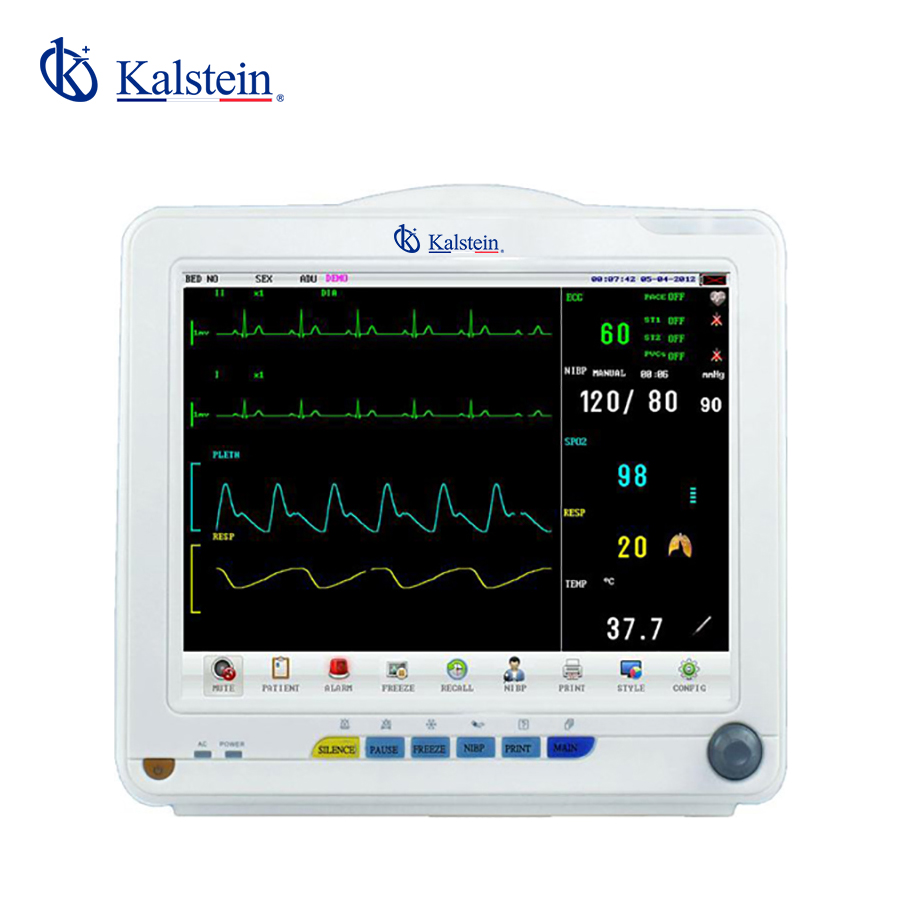
Visualización multicanal Interfaz de fuente grande Análisis de ST y arritmias Cálculo de la dosis del fármaco y tabla de valoración Visualización dinámica OxyCRG Monitorización de la respiración con alarmas de apnea Revisión de alarmas, revisión de arritmias Protección contra sobrepresión NIBP Batería recargable enchufable, disponible en CA/CC. Soporta redes alámbricas o inalámbricas. Pantalla multicanal Interfaz de fuente grande Análisis ST y de arritmias Cálculo de dosis de fármacos y tabla de titulación Visualización dinámica OxyCRG Monitorización de la respiración con alarmas de apnea Revisión de alarmas, revisión de arritmias Protección contra sobrepresión PNI Batería recargable enchufable, CA/CC disponible. Soporte de red cableada o inalámbrica.
This page provides an overview of the Patientenmonitor YR02172, including selection criteria, investment factors, operational advantages and maintenance recommendations. The aim is to support an informed decision before requesting a quotation.
This Kalstein model is available for laboratories in Germany, with selection criteria adapted to local purchasing, installation and support conditions.
Wichtige Faktoren
Before selecting the Patientenmonitor YR02172, confirm workflow, available space, required accessories and installation conditions. This prevents oversizing the purchase and helps prepare a more accurate quotation.
Its use is oriented to laboratory routines that require observation, control and operational continuity.
For the market in Germany, evaluation should consider local context such as industrial labs, Mittelstand pharma, strict DIN/EN standards and match the product to the real workload of the Labor.
Marktpreisspanne
The investment should be evaluated according to configuration, required accessories, installation conditions and available technical support.
The final price may vary according to configuration, accessories, logistics, warranty and territorial availability. Compare the technical sheet with the real laboratory workload before confirming the investment.
In Germany, budget comparison should include local regulatory requirements, 230V/50Hz power conditions, accessories, logistics and after-sales support.
Preis-Leistungs-Verhältnis
Equipment value depends on operational stability, required accuracy, ease of maintenance and accessory availability.
Value for money should be reviewed together with equipment stability, after-sales support, technical documentation and expected service life. A well-matched selection reduces downtime and improves return on investment.
Vor- und Nachteile
Its use is oriented to laboratory routines that require observation, control and operational continuity.
Main advantages include specialized application, integration with laboratory routines and accessory configuration. Limitations may include installation requirements, user training and preventive maintenance to preserve performance.
Erwartete Lebensdauer je nach Nutzung und Wartung
Modelo YR02170 YR02171 YR02172 ECG Modo de derivación 5 Derivaciones (RA,LA,LL,RL,V) Método de conexión I, II, III,AVR,AVL,AVF,V Modo de derivación 3 Derivaciones (RA,LA,LL) Método de conexión I, II,III Forma de onda 1 canal Ganancia x250, x500, x1000, x2000 Rango de FC Adulto: 15~300 lpm Neo/Ped 15~350 lpm Precisión ±1% o ±1 lpm Resolución 1 lpm Sensibilidad >200(uVp-p) Impedancia de entrada diferencial ≥5MΩ Rango de monitorización del segmento ST Rango de medición -2.0~+2.0mV Precisión de medición -0.8mV~+0.8mV Frecuencia Cardíaca Rango de medición 0~350 lpm 20~300 lpm Precisión ±1 lpm Resolución 1 lpm Sensibilidad >200UVp-p Respiración Método Impedancia entre R-F(RA-LL) Impedancia de entrada diferencial >2.5MΩ Rango de impedancia de medición 0.3~3.
Service life depends on usage frequency, cleaning, storage, calibration when applicable and adherence to technical recommendations. A structured maintenance plan helps preserve accuracy, safety and operational continuity.
Support and spare-parts availability oriented to Germany helps preserve service continuity and plan preventive maintenance without extended downtime.
Spezifikationstabelle des Patientenmonitor YR02172
Patientenmonitor YR02172
- Multikanal-Visualisierung
- Großes Quellen-Interface
- ST-Analyse und Arrhythmien
- Berechnung der Medikamentendosis und Bewertungs Tabelle
- Dynamische OxyCRG-Visualisierung
- Atemüberwachung mit Apnoe-Alarmen
- Alarmüberprüfung, Überprüfung von Arrhythmien
- Überdruckschutz NIBP
- Aufladbare Steckbatterie, verfügbar in CA/CC.
- Unterstützt kabelgebundene oder drahtlose Netzwerke.
- Multikanal-Display
- Großes Quellen-Interface
- ST-Analyse und Arrhythmien
- Berechnung der Medikamentendosen und Titrationstabelle
- Dynamische OxyCRG-Visualisierung
- Atemüberwachung mit Apnoe-Alarmen
- Alarmüberprüfung, Überprüfung von Arrhythmien
- Überdruckschutz PNI
- Aufladbare Steckbatterie, CA/CC verfügbar.
- Unterstützung für kabelgebundene oder drahtlose Netzwerke.
| Modell | YR02170 | YR02171 | YR02172 | |
EKG | Ableitungsmodus | 5 Ableitungen (RA,LA,LL,RL,V) | ||
| Verbindungsmethode | I, II, III,AVR,AVL,AVF,V | |||
| Ableitungsmodus | 3 Ableitungen (RA,LA,LL) | |||
| Verbindungsmethode | I, II,III | |||
| Wellenform | 1 Kanal | |||
| Verstärkung | x250, x500, x1000, x2000 | |||
| HR-Bereich | Erwachsene: 15~300 lpm | |||
| Neo/Pädiatrie | 15~350 lpm | |||
| Genauigkeit | ±1% oder ±1 lpm | |||
| Auflösung | 1 lpm | |||
| Empfindlichkeit | >200(uVp-p) | |||
| Differenzielle Eingangsimpedanz | ≥5MΩ | |||
| Überwachungsbereich des ST-Segments | ||||
| Messbereich | -2.0~+2.0mV | |||
| Messgenauigkeit | -0.8mV~+0.8mV | |||
Herzfrequenz | Messbereich | 0~350 lpm | 20~300 lpm | |
| Genauigkeit | ±1 lpm | |||
| Auflösung | 1 lpm | |||
| Empfindlichkeit | >200UVp-p | |||
Atmung | Methode | Impedanz zwischen R-F(RA-LL) | ||
| Differenzielle Eingangsimpedanz | >2.5MΩ | |||
| Messimpedanzbereich | 0.3~3.0 MΩ | |||
| Basislinienimpedanzbereich | 200~4000Ω | |||
| Bandbreite | 0.1~2.5Hz | |||
| Atemfrequenz | Erwachsene: 2~120 rpm | |||
| Neo/Pädiatrie | 2~150 rpm | 0~150 rpm | ||
| Auflösung | 1 rpm | |||
| Genauigkeit | ±2 rpm | |||
| Alarm | 10~40 Sekunden | |||
PNI | Methode | Oscillometrisch | ||
| Modus | Manuell/Automatisch/STAT | |||
| Messintervall im AUTO-Modus | 1, 2, 3, 4, 5, 10, 15, 30, 60, 90, 120, 180, 240, 480 (Min) | |||
| Messperiode im STAT-Modus | 5 Min | |||
| Pulsfrequenzbereich | 40~240 lpm | |||
| Alarmtyp | SYS, DIA, MEAN | |||
| Auflösung | ||||
| Druck | 1mmHg | |||
| Genauigkeit | Maximaler Mittelwertfehler: 5mmHg | |||
| Maximale Standardabweichung | 8mmHg | |||
SPO2 | Anzeige | Anzahl der SPO2, Wellenform der Kapazität, Puls | ||
| Messbereich | 0~100% | |||
| Auflösung | 1% | |||
| Genauigkeit | 70~100% (±2%) | |||
| Alarmsystem | Audio-Video-Alarm | |||
| Pulsfrequenzbereich | 0~300 lpm | |||
TEMP | Kanal | 2 | ||
| Mess- und Alarmbereich | 0~50ºC | |||
| Auflösung | 0.1ºC | |||
| Genauigkeit | 0.1ºC | |||
| Aktualisierungsintervall | Ungefähr 1 Sekunde. | |||
| Durchschnittliche Zeitkonstante | <10 Sekunden. | |||
Häufig gestellte Fragen zu Patientenmonitor YR02172
How do I choose the right patientenmonitor yr02172 for my Labor?
Selection should start from workload, critical technical parameters, available space and frequency of use. Kalstein can support the comparison between operational needs, budget and maintenance requirements to avoid choosing equipment that is oversized or insufficient.
What should I review before requesting a quotation?
Review the model, technical specifications, required accessories, electrical conditions, consumables, delivery timing and installation needs. With this information, the quotation can be prepared more accurately and aligned with the laboratory workflow.
Does Kalstein provide guidance for this type of equipment?
Yes. The commercial and technical team can support product evaluation, explain differences between models, answer application questions and advise on preventive maintenance, spare parts and documentation required for a secure purchase.
What maintenance helps extend the equipment lifespan?
Follow the manufacturer manual, perform regular cleaning, verify calibrations or controls when applicable, avoid workload abuse and keep maintenance records. Stable use and preventive routines reduce failures and improve operational continuity.