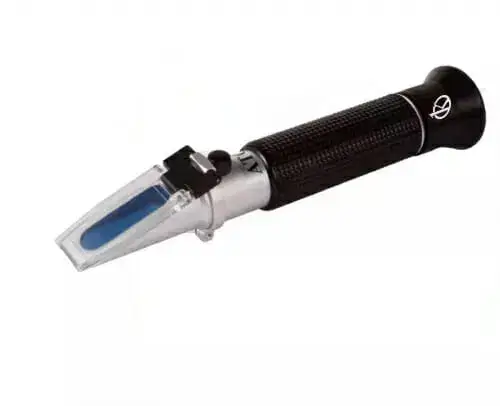
Maximizing Return on Investment: Cost-Benefit Analysis for Digital Clinical Refractometers
In the competitive landscape of laboratory equipment, understanding the return on investment (ROI) and conducting a thorough cost-benefit analysis is crucial for making informed purchasing decisions. This article will provide a focused analysis of Digital Clinical Refractometers, particularly their financial implications for laboratory operations. We will compare various models, analyze their features and benefits, and guide laboratory professionals in optimizing their investments.
Framing Digital Clinical Refractometers through ROI and Cost-Benefit Analysis
Digital Clinical Refractometers are essential tools in both veterinary and human medicine, providing rapid and precise measurements of critical liquid levels. With models like the Clinical Refractometer YR05915 and Digital BRIX Refractometers, laboratories must carefully evaluate not just the upfront costs, but also long-term savings and productivity gains. An effective cost-benefit analysis takes into account initial capital expenditures (CAPEX), operational expenses (OPEX), and the overall impact on workflow efficiency and accuracy of test results.
Comparison of Available Models
| Model | CAPEX (USD) | Cost per Test (USD) | Payback Period (Months) | Recommended Scenario |
|---|---|---|---|---|
| YR05915 | 9.50 | 0.05 | 2 | Small clinics or veterinary practices |
| YR05966 | 76.00 | 0.10 | 6 | Medium-sized veterinary clinics |
| YR05967 | 76.00 | 0.10 | 6 | Clinical labs focusing on serum protein |
| YR05968 | 76.00 | 0.10 | 6 | Research laboratories with multiple applications |
Understanding Cost-Benefit Metrics for Digital Clinical Refractometers
When evaluating Digital Clinical Refractometers from a cost-benefit perspective, it is essential to assess three primary metrics: CAPEX, OPEX, and overall efficiency. For example, the Clinical Refractometer YR05915 is priced at $9.50, offering significant savings in consumables and maintenance costs, providing a strong ROI for smaller clinics. In contrast, models like YR05966, YR05967, and YR05968, while higher in initial cost at $76.00, provide more versatile features suitable for larger operations. Thus, understanding these trade-offs directly influences purchasing decisions.
Common Mistakes and How to Avoid Them
When selecting a Digital Clinical Refractometer, laboratories often overlook key factors that can impact ROI. A common mistake is focusing solely on the purchase price without considering operational costs, such as maintenance, calibration, and consumables. Additionally, neglecting to assess the specific needs of their laboratory can lead to purchasing a model that does not deliver the required performance or efficiency. Conducting a thorough needs assessment and comparing long-term costs across models improves investment decisions.
Frequently Asked Questions
How can I determine the ROI on a Digital Clinical Refractometer purchase?
To determine the ROI on a Digital Clinical Refractometer, you need to calculate the expected savings from efficient operations against the initial investment. For instance, the YR05915 model, with a low initial cost of $9.50, can lead to significant savings over time through reduced consumable expenses, ultimately shortening the payback period to approximately 2 months.
What are the key factors affecting the cost per test for Digital Clinical Refractometers?
The cost per test for Digital Clinical Refractometers is influenced by the price of consumables, maintenance costs, and the frequency of use. For example, the YR05966 model, priced at $76.00, may yield a cost per test of $0.10, making it a cost-effective choice in high-throughput environments, especially compared to less efficient alternatives.
Which Digital Clinical Refractometer offers the best value for small veterinary clinics?
The Clinical Refractometer YR05915 offers the best value for small veterinary clinics due to its low CAPEX of $9.50 and minimal operational costs. Its ability to accurately measure vital fluid levels quickly makes it an excellent investment for clinics with limited budgets who still need reliable performance.
How does temperature compensation impact the cost-effectiveness of a refractometer?
Temperature compensation is essential for accurate readings in varying conditions, which can reduce errors and the need for retesting. Models like YR05915 and YR05966 feature automatic temperature compensation (ATC), enhancing their accuracy and operational efficiency, ultimately reducing costs associated with incorrect results.
What is the expected lifespan of a Digital Clinical Refractometer?
A typical Digital Clinical Refractometer has a lifespan of 5 to 10 years, depending on usage and maintenance. Regular calibration and proper care can help models like YR05968 extend their operational life, maximizing the return on investment.
How do Digital Clinical Refractometers ensure measurement accuracy?
Measurement accuracy in Digital Clinical Refractometers is ensured through features like automatic temperature compensation and high precision optics. For instance, the YR05915 model boasts a precision of ±0.2g/dl, facilitating reliable readings critical for laboratory workflows.
What role does calibration play in maintaining the value of a refractometer?
Calibration is crucial for maintaining the accuracy and reliability of Digital Clinical Refractometers. Regular calibration schedules, as required for models like YR05966, help prevent measurement drift, ensuring consistent performance and protecting the laboratory’s investment.
How can I optimize the use of a Digital Clinical Refractometer in my laboratory?
Optimizing the use of a Digital Clinical Refractometer involves ensuring proper training for staff, following calibration protocols, and routinely checking for functionality. For example, the YR05968 model can be integrated into laboratory workflows to streamline processes and improve throughput.
If you are looking for a fusion of innovation and quality, you have come to the right place. At Kalstein, we offer you the luxury of exploring our exclusive catalog of laboratory equipment. We manufacture every device to the highest standards of excellence. Our intuitive and seamless online purchasing channels are designed for your convenience, securing the most competitive prices. Hesitate no longer — we bring science to life, it is time to become part of our community.