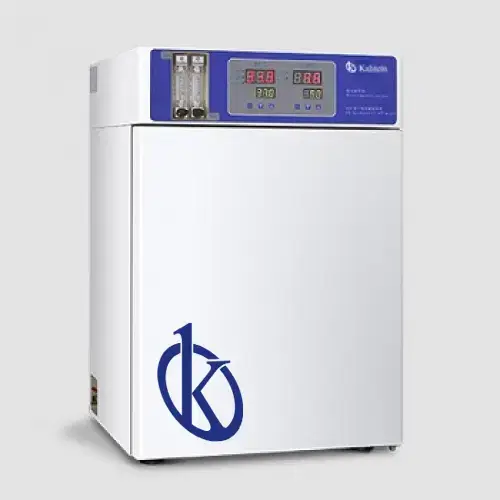
Integrating CO₂ Incubators with LIMS: Enhancing Data Workflow in Laboratories
As laboratories continue to evolve towards automation and digitalization, the integration of CO₂ incubators with Laboratory Information Management Systems (LIMS) has become essential. This integration not only streamlines data management but also enhances operational efficiency. This article delves into the essential aspects of CO₂ incubators, their integration with LIMS, comparing various models, and addressing common challenges faced by laboratories.
Understanding CO₂ Incubators and Their Role in Laboratories
CO₂ incubators are critical for cell culture, microbiological research, and various applications in the life sciences. They provide a controlled environment for growing cells, tissues, and other organisms, maintaining temperature, humidity, and CO₂ levels. In laboratories, the precise control of these parameters is vital for reproducibility and accuracy of experiments.
Integrating CO₂ incubators with LIMS facilitates real-time monitoring and data collection, ensuring that environmental conditions are recorded and maintained according to protocol. This integration promotes compliance with standards such as ISO 17025, which requires strict documentation of lab equipment and procedures.
Models Comparison: CO₂ Incubators and Their LIMS Integration Capabilities
| Model | Temperature Range (℃) | CO₂ Control Range (%) | Integration Protocols | Best For |
|---|---|---|---|---|
| YR02048 | RT + 5 ~ 60 | 0 ~ 20% | ASTM, REST | Cell cultures, Genetic research |
| YR02049 | RT + 5 ~ 60 | 0 ~ 20% | HL7, Middleware | Microorganism research, Agricultural sciences |
| YR02049-1 | RT + 5 ~ 55 | 0 ~ 20% | Custom API | Pathology, Life sciences |
Benefits of LIMS Integration with CO₂ Incubators
The primary benefit of integrating CO₂ incubators with LIMS is improved data management. LIMS can automate data recording and management, which reduces human error. Furthermore, it provides a centralized platform for all experimental data, making it easier to track progress and ensure compliance with regulatory standards.
Moreover, real-time monitoring features allow for immediate adjustments based on fluctuations in environmental conditions, enhancing the integrity of cell cultures and experiments. For example, the YR02049 model, with its HL7 and Middleware compatibility, is especially suited for labs focusing on agricultural sciences and microorganism research where data accuracy is critical.
Common Challenges in CO₂ Incubator and LIMS Integration
While the integration of CO₂ incubators with LIMS offers numerous benefits, several challenges may arise. One common issue is the compatibility of different systems and software used in laboratories. Ensuring that the LIMS can effectively communicate with the incubators requires careful planning and potentially additional software development.
Another challenge is data migration from existing systems to the new integrated platform. Laboratories must ensure that historical data is preserved and properly formatted to comply with new standards. Choosing models like the YR02049-1, which supports custom APIs, can facilitate smoother integration.
Best Practices for Implementing CO₂ Incubator and LIMS Integration
To ensure a successful integration of CO₂ incubators with LIMS, laboratories should follow several best practices. First, conducting a feasibility study can help identify potential compatibility issues early on. Additionally, establishing clear protocols for data management and documentation will align the new system with compliance standards.
Training staff on the new system is also paramount. Utilizing models that offer user-friendly interfaces, like the YR02049, can simplify training processes and enhance staff adoption of the integrated system.
Cost-Benefit Analysis of CO₂ Incubator Integration with LIMS
Conducting a cost-benefit analysis (CBA) is essential for laboratories considering CO₂ incubator integration with LIMS. This analysis should include initial investment costs, ongoing operational costs, and potential savings from improved efficiency and reduced errors.
| Model | Initial Cost (USD) | Estimated Savings per Month (USD) | Payback Period (Months) |
|---|---|---|---|
| YR02048 | 1300 | 150 | 8.67 |
| YR02049 | 1900 | 200 | 9.50 |
| YR02049-1 | 3200 | 250 | 12.80 |
Frequently Asked Questions
What are the benefits of using a LIMS with a CO₂ incubator like YR02049?
Integrating a LIMS with a CO₂ incubator like the YR02049 enhances data accuracy and compliance with standards. It automates data logging and helps track environmental parameters, ensuring optimal conditions for cell cultures.
How does the YR02048 model improve efficiency in laboratories integrating LIMS?
The YR02048 offers a robust temperature control system that can be monitored through LIMS, allowing for real-time adjustments and ensuring that lab conditions remain optimal for experiments.
Which protocols are supported by the YR02049 CO₂ incubator for LIMS integration?
The YR02049 supports various integration protocols such as HL7 and Middleware, which facilitate seamless connectivity and data exchange between the incubator and LIMS.
How can laboratories ensure compliance with ISO 17025 using CO₂ incubators?
Using models like the YR02049-1, which provide detailed environmental monitoring and data logging, can help laboratories meet the documentation and traceability requirements set by ISO 17025.
What is the expected payback period for investing in LIMS with CO₂ incubators?
Based on the initial costs and estimated savings, the payback periods for models like the YR02048 and YR02049 range from approximately 8.67 to 9.50 months, making them cost-effective options for labs.
Why should laboratories consider the YR02049-1 for LIMS integration?
The YR02049-1's support for custom APIs allows for versatile integration solutions, making it ideal for laboratories needing flexibility in their LIMS setup.
How does real-time monitoring enhance laboratory productivity with CO₂ incubators?
Real-time monitoring features in CO₂ incubators, such as the YR02049, enable labs to quickly respond to environmental changes, thus maintaining optimal conditions and improving experimental outcomes.
What challenges might arise when integrating a LIMS with a CO₂ incubator?
Challenges may include compatibility issues between existing systems and new equipment. Conducting a thorough feasibility study can help mitigate these risks during implementation.
If you are looking for a fusion of innovation and quality, you have come to the right place. At Kalstein, we offer you the luxury of exploring our exclusive catalog of laboratory equipment. We manufacture every device to the highest standards of excellence. Our intuitive and seamless online purchasing channels are designed for your convenience, securing the most competitive prices. Hesitate no longer — we bring science to life, it is time to become part of our community.